Showing posts with label Porsche. Show all posts

Thursday, May 3, 2012

2013 Renault Wind Roadster Luxury Review


2013 Renault Wind Roadster rewrites the rules for coupé-roadsters. In town, its chic design and compact size are astounding. Roof up or down, it’s guaranteed showtime: check out the rear boomerang-shaped headlights, sporty and elegant lines and beautiful 17" alloy wheels*. Out on the road, prepare for an exhilarating drive.

The 2013 Renault Wind Roadster engine and chassis is based on a platform that has been engineered by Renault sport Technologies to give you outstanding steering precision and thrilling responses. And the performance orientated 1.6 VVT 133 engine is borrowed from Twingo Renaultsport (ESC with disconnection function). The thrum of its sportssounding engine acoustic, low driving position, rigid chassis and superb balance are the spicy ingredients that conjure up a dynamic and precise drive. Where will your playground be? In the city or out on the open road? But hang on... who said you had to choose? Freedom! We kick-started it with a very smart, original idea: a pivoting, electric hard-top roof. Result ?

It opens in just 12 seconds to transform the coupé into a roadster. And vice versa. Simple, practical, and super-quick ? Certainly. But here’s the twist. Incredibly, the boot still keeps its same storage space of 270 litres even when the roof is stowed. Nothing else even comes close. Inside the Wind Roadster lies a true sporting cockpit. With seats that have extra lateral support and integral headrests, height adjustable leather steering wheel and full front/lateral airbag protection. Stylish and snug are the adjectives that spring to mind, as you lower yourself into ergonomically-ideal yet suitably comfortable surroundings, ready to take in the easy-read instruments and with everything falling neatly to hand.

A dark grey interior with sports style seats with extra lateral support and a modern, dynamic dashboard design. Chrome instrument surrounds, black translucent instrument visor, leather steering wheel and leather gear lever… The Wind Roadster adopts a neat and indisputably sporty style.

Renault Wind Radster and its unique, electric, rotating-roof concept bring a breath of fresh air to the world of open-top motoring. “Renault Wind extends the brand’s range with a new model wholly dedicated to the pleasure of its occupants inviting them to enjoy an alternative way of driving. Through its concept and the technology it employs, Wind Roadster is an ingenious illustration of Renault’s new brand signature, ‘Drive the Change’” Renault Wind Roadster targets customers looking for a compact everyday car and, as a two-seat coupé-roadster with a length of 3.83 meters, it slots into the Renault range between Twingo and Clio. Thanks to its ingenious, electrically-operated roof system, which pivots open in just 12 seconds, Renault Wind boasts unprecedented versatility: in the lowered position, the roof panel rests above the boot, meaning that boot volume is always 270 dm3 VDA, whether the roof is up or down.


Renault Wind Roadster has head-turning looks. Its blue-tinged gaze, muscular profile and rear-end forms, give it an emphatically modern profile. Unique styling details include the roof-cover cowls, chrome exterior door mirror housings and badging on the side which recalls the rotational movement of the roof-opening mechanism. Meanwhile, there is an unmistakable ‘cockpit’ feel about the interior. The instruments are reminiscent of the world of motorbikes, the sport seats feature integrated head rests, while the low-set driving position and sporty layout of the controls are typical of roadsters.

The expertise of Renault Sport Technologies (R.S.T) in the realm of motoring enjoyment needs no introduction, and Renault Wind has benefited extensively from the expertise of R.S.T’s engineers. The new coupé-roadster is built on the same platform as Clio 2 R.S., and its chassis is perfectly suited to the power outputs of the two engines that are available for the car, the TCe 100 and the 1.6 16V 133hp. One of the chief accomplishments of R.S.T’s engineers is the fact that they have achieved the best weight to body-rigidity ratio for a coupé-roadster, allowing Renault Wind owners to profit from an outstanding ride plus very low fuel consumption and CO2 emissions.

When it comes to this type of car, exterior styling is the chief factor in the purchase decision. Therefore, to appeal to its market, Renault Wind’s design needed to be both dynamic and robust, as well as unmistakably modern. Seen from the side, Renault Wind's sporty, robust lines, steeply-raked bonnet, high waistline, extensively sculpted flanks and integral roll hoop immediately strike the eye. The two roof-cover cowls located in the slipstream of the head rests are distinctive roadster features and form a natural link between the interior and exterior.
Work on the windscreen header-rail, which sits in a far more forward position than that of rival convertibles, heightens the pleasure associated with open-top motoring and further underpins Wind’s roadster credentials. The rear end incorporates a distinctive wing which forms part of the boot lid, while the boomerang-shaped rear lights provide a readily identifiable lighting signature.


There is an unmistakable ‘cockpit’ feel about Renault Wind's interior which has been designed to heighten the sense of motoring enjoyment through a host of sporty cues. These include sport seats with integrated head rests, full instrumentation set in profiled tunnels and a translucent
instrument panel cowl (red or black) that recalls the world of motorbikes. The Dark Charcoal ambiance is set off by the door pulls, aluminium pedal covers, sports steering wheel and a range of satin-finish chrome details that highlight Renault Wind’s unique coupé-roadster appeal and
irresistibly tempt you to open the roof and head off for the country!


Wednesday, May 2, 2012

2012 Porsche Panamera Review


The 2012 Porsche Panamera Exclusive stands for the individual personalisation of your vehicle, direct from the factory. The possibilities are as wide ranging as your imagination. You tell us what you want and we will do our utmost to give it to you provided, of course, that it is technically feasible and does not compromise quality. When customising a car, it is not enough just to use the best available materials. Our overriding principle has always been to make full use of the traditional skills of our craftsmen, carrying out the work by hand where necessary. Our specialists have years of experience in hand-crafting decorative hardwoods, enabling us to bring out the individual character of this superb material. What about carbon? Lightweight, extremely durable and manufactured to ensure an exact fit. It expresses all the excitement of the racetrack. Or aluminium? Brushed or high-gloss, this lightweight alloy accentuates the finer details of your Porsche Panamera. So whether you would like to personalise the interior and exterior of your car, add a Sport Design package or Powerkit, your wish is our command.

A Porsche is more than just a car. It is also an expression of the personal freedom of its driver, and of their very own taste and lifestyle. Porsche Panamera Exclusive offers you a wide range of individual extras so you can personalise your car to your own unique requirements, straight from the factory. Visual and technical enhancements, for the interior and exterior, the way you want them. The most important extra, though, is time. For it is only by taking the utmost care during the consultancy, planning and processing phases that it is possible to create something really special. Something which is exactly tailor made to your requirements down to the finest detail. Something unique, with its own individual character. A 2012 Porsche Panamera which is as special as its driver. The following pages will show you five examples of Exclusive personalisations which are sure to inspire you. The exterior details painted in black. The interior package painted, PDK gear selector in aluminium and several features in Espresso leather including the air vent slats. Everything according to your requirements and down to the finest detail, and all of the highest quality  just like the car.

The Porsche Panamera 4S in Yachting Blue Metallic. The Sport Design package gives the exterior a dynamic look. The interior package in Yachting Mahogany provides a touch of maritime flair. Other highlights include a cooling compartment in the rear and Porsche Rear Seat Entertainment. Painted air intake grilles, painted air vents and 20-inch Panamera Turbo Sport wheels complete the exterior look, whilst the interior features include the additional dashboard trim package in leather, a rear-view mirror in leather and numerous other leather elements. The black colour scheme throughout allows the red design accents to be shown off to full effect. Your very own ideas and desires brought to fruition. After all, it’s often only in the small details where true style finds expression. Extremely charismatic the Porsche Panamera S in Carbon Grey Metallic. Thanks to the interior package painted in a Carbon Grey Metallic finish. All the finishing touches according to your personal request, right down to the Sport Chrono stopwatch dial face in Luxor Beige.

All models have a two-stage resonance intake system, which uses the vibration of the air as
it passes through the intake manifold to increase the intake volume. The system can adjust
to engine speed. Benefits of this include higher torque at low engine speeds and a flatter torque curve. The entire intake system is made from lightweight plastic. The air filter housing of the 3.8-liter engine has a variable geometry that brings added character to the engine sound, which
becomes much more aggressive at higher rpm.


A philosophy of thinking laterally and pursuing different routes is undoubtedly what has led Porsche in a very special direction: an exclusive one. Small scale production and special editions which commenced at the beginning of the 1980s with the 935 Street still continue to this day. At the heart of it all is the Porsche ‘personalisation programme’ which has been known since 1986 as Porsche Exclusive. The 25th anniversary of Porsche Exclusive sees us continuing that tradition of small-scale production with a vehicle which yet again shows you just what we’re capable of. A vehicle that takes us back to where the dream began to the first Porsche, in fact, the Porsche 356. Hence, the limited number of 356 and the name of the vehicle: the 911 Speedster.

The 911 Speedster may well be a limited edition, but your dreams know no limits. We do everything possible to fulfil your wishes. To make your Porsche even more exclusive and exactly how you imagined it to be. We’re even happy to include extras featured on the 911 Speedster.
So whether your preference is for a PDK gear selector/handbrake lever in aluminium, black painted mirror attachment point finishers and exterior mirror lower trims, or door sill guards with personalised logo, almost anything is possible.

2013 Porsche Panamera 4S Extremely Powerful


The new 2013 Porsche Panamera 4S is equipped as standard with adaptive air suspension including Porsche Active Suspension Management (PASM). This combined system enhances both dynamic performance and comfort. It features a leveling system, ride-height adjustment, spring rate adjustment and electronic adjustment of damping forces. With the air suspension at Normal Level, the 2013 Panamera 4S already sits 0.39 in (10 mm) lower than other Panamera models and the suspension has a firmer setting. As soon as SPORT PLUS mode is selected, the suspension automatically drops to Low Level (0.59 in lower). At the same time, a harder spring rate is achieved through a reduction in the amount of air stored in the air suspension.

The manual lift function enables you to raise the vehicle body by 1.18 in (30 mm) to High Level to minimize the risk of grounding, e.g. on car park ramps.* The purpose of the leveling system is to keep the vehicle level constant automatically and regardless of load distribution. PASM is an electronic damping control system. It actively and continuously regulates damping forces according to driving style and road conditions for increased body stability and a more direct steering response. It is possible to select from three modes: Comfort, SPORT or SPORT PLUS. For you, this involves nothing more than the press of a button and you can feel the result: increased driving stability, more comfort and improved performance.

Fitted as standard in the 2013 Porsche Panamera 4S, Porsche Traction Management (PTM) comprises an active all-wheel drive with electronic and map-controlled multiplate clutch with Automatic Brake Differential (ABD) and Anti-Slip Regulation (ASR). The electronically controlled multiplate clutch regulates the fully variable distribution of drive force between the permanently driven rear axle and the front axle. Through continuous monitoring of driving conditions, the electronics are able to respond to a variety of situations. Sensors check, among other variables, the rotation speeds of all four wheels, the longitudinal and lateral acceleration of the vehicle, and the steering angle. If the rear wheels threaten to spin under acceleration, a greater proportion of drive force is distributed to the front by a more powerful engagement of the multiplate clutch. In addition, ASR reduces wheel slip.

When cornering, the front wheels only ever receive as much drive force as is necessary to guarantee optimum lateral stability. In this way, PTM, in interaction with Porsche Stability Management (PSM, p. 27) ensures that the perfect distribution of drive is achieved every time: whether on long straights, through tight corners, or on surfaces with different friction coefficients. In this situation, traction is additionally enhanced by the Automatic Brake Differential (ABD). Whenever the brake control systems are required to intervene, PTM decouples the front axle completely so that PSM interventions can take place at each individual wheel.

Precise and direct: describes a typical Porsche steering system with variable steering ratio. Around the straight-ahead position, such as during motorway driving, the ratio is less direct with no loss of agility or feedback from the road. When the steering wheel is turned further, the ratio becomes more direct, allowing easier cornering and parking. Servotronic, the speed-sensitive powersteering system, is available as an option. At high speeds, the steering is firm and responds with extreme precision while steering comfort remains as high as you would expect. At low speeds, Servotronic’s ratio adjusts for easy maneuvering and parking.

The 2013 Panamera 4S is an extremely powerful vehicle, which is why it comes equipped as standard with 19-inch Panamera Turbo wheels featuring a classic sporty design. Tire sizes 255/45 ZR 19 and 285/40 ZR 19 are fitted to the front and rear respectively. For a wider track, wheel spacers (5 mm) are fitted at the rear as standard. A selection of 19- or 20-inch wheels is available in our range of options. Alternatively, you can select a set of 19-inch all-season tires. A low-rolling resistance version of these tires is available as an option. These reduce fuel consumption and offer improved durability. Tire Pressure Monitoring System (TPMS), which is fitted as standard, sends warnings to the on-board computer’s display screen in the event of excessive pressure loss.

 PSM is an automatic control system that stabilizes the vehicle at the limits of dynamic driving performance. Sensors continuously monitor driving direction, speed, yaw velocity and lateral acceleration. Using this information, PSM computes the actual direction of motion. If this direction deviates from the desired course, PSM can, for example, initiate braking interventions targeted at individual wheels in order to stabilize the vehicle. Under acceleration on wet or low-grip road surfaces, PSM improves traction using the ABD (Automatic Brake Differential) and ASR (Anti-Slip Regulation) functions. For an even more involving driving experience, you always have the option to deactivate PSM. It is automatically reactivated, for your safety, only if you brake harder and either of the front wheels (in SPORT PLUS mode, both of the front wheels) requires ABS assistance. PSM comes with two additional functions: precharging of the brake system, enabling maximum braking power to be achieved much sooner; and brake assist, for maximum deceleration in a critical situation.

PDCC is available as an option for the Panamera 4S. This is an active anti-roll system that anticipates and significantly reduces lateral body movement during cornering maneuvers. In addition, it minimizes the lateral instability of the vehicle on uneven ground. The effect is
achieved with the aid of active anti-roll bars on the front and rear axles which respond to the current steering angle and lateral acceleration by producing a stabilizing force that precisely negates the roll of the body. PTV Plus combined with PDCC is a system that actively enhances vehicle dynamics and stability. Operating in conjunction with an electronically regulated rear differential lock, it works by varying the torque distribution to the rear wheels. To be more precise, this means that when the car is driven assertively into a corner, moderate brake pressure is applied to the inside rear wheel. Consequently, a greater amount of drive force is distributed to the outside rear wheel, inducing an additional rotational pulse (yaw movement) around the vehicle’s vertical axis.


This results in a direct and sporty steering action as the car enters the corner. At low and medium vehicle speeds, PTV Plus significantly increases agility and steering precision. At high speeds and when accelerating out of corners, the electronically regulated rear differential lock ensures greater driving stability. It also serves to improve traction at the rear wheels on road surfaces with varying levels of grip, in the wet and on snow. For the driver, this means remarkable lateral vehicle stability, optimum traction as well as a high degree of agility at every speed with precise steering and stable load transfer characteristics. In short, it offers pure driving pleasure.

2013 Porsche Panamera GTS Review

In the 2013 Porsche Panamera GTS, the SportDesign steering wheel is fitted as standard and features gearshift paddles and a top center marking on its smooth-finish leather rim. The paddles are made from a strong alloy and are ergonomically located behind the right and left steering wheel spokes. Pull the right-hand paddle to shift up and pull the left-hand paddle to shift down. A display in the left- and right-hand steering wheel spokes tells you whether SPORT, SPORT PLUS, and ‘Launch Control’ (p. 28) are activated.Supreme performance is a concept that will never become clichéd as far as Porsche is concerned. We’ve devoted far too much passion to it. If you want to know exactly what the ‘GTS’ logo promises in terms of performance, you would be better off experiencing it for yourself. In the meantime, we’ve compiled some facts and figures for you.

The 2013 Porsche Panamera GTS is powered by a lightweight 4.8-liter V8 naturally aspirated engine. It features cast aluminum pistons, monobloc aluminum cylinder heads and integrated dry-sump lubrication for a reliable supply of oil even when an extremely sporty driving style is adopted. Although it is based on the engine of the Panamera 4S, it develops 30 hp more power and generates 14.75 lb.-ft. more torque. It also has a faster-revving engine with a maximum engine speed that has been increased by 400 rpm to 7,100 rpm. The result is a maximum power output of 430 hp and a maximum torque of 383 lb.-ft. This power upgrade was achieved through a series of measures, including modified intake camshafts with extended valve lift and a new air induction system with two additional air filter modules each located in the left- and right-hand sides of the front fascia respectively.


Above 3,500 rpm, the flaps on the air filter modules are opened to allow the engine to draw in air more easily. At high road speeds, headwind ram pressure is exploited to achieve a further increase in power output. In addition, the 2013 Panamera GTS is equipped with a specially modified engine management system. Not only does this help the engine to develop torque quickly for a perceptibly more direct engine response, it also contributes to a further reduction in the shift times achieved by Porsche Doppelkupplung (PDK), which is fitted as standard. It does this by deactivating selected engine cylinders temporarily during each gearshift. Our modifications are reflected in the distinctly resonant engine sound and can be felt in every bone of your body. In SPORT PLUS mode, the Porsche Panamera GTS accelerates from 0–60 mph in just 4.3 seconds and reaches a top speed of 178 mph. In short, the drive system of the Panamera GTS concentrates 100 % on the essentials: maximum performance.

With millisecond precision, DFI injects fuel at up to 1,740 psi directly into the combustion chamber by means of electromagnetically actuated injection valves, thus ensuring homogeneous distribution of the air/fuel mixture, and, therefore, effective combustion. As the mixture is prepared directly in the cylinders, DFI improves the internal cooling of the combustion chambers compared with that of a manifold injection system. The achievable compression ratio of 12.5:1 helps to ensure a high level of engine efficiency.

The Panamera GTS is also equipped with VarioCam Plus which automatically adjusts the intake camshafts and switches the lift of the intake valves. In the middle and low load ranges, low valve lifts with advanced timing reduce fuel consumption and exhaust emissions and improve smooth
running. High torque and maximum output are achieved through high valve lifts and retarded timing. How does this benefit you? Extraordinary acceleration power with comparatively low fuel consumption.


The Auto Start Stop function is also standard in the Panamera GTS. If, for example, you stop at traffic lights and keep your foot on the brake pedal, the system will automatically switch the
engine off. This fuel-saving system restarts the engine as soon as you release the brakes.
A key advantage is that there is no need for you to change your driving habits. You can simply carry on as normal. All audio and communication systems remain switched on and the climate control continues to maintain your selected temperature, despite the engine being switched off. The engine restarts if more power or extra cooling output is required.


The Auto Start Stop function can be activated and deactivated using a separate button. The function may Sport exhaust system remain inactive under particular circumstances, e.g. in very high outside temperatures, on extreme uphill gradients, or if battery charge is low, and will be deactivated if SPORT or SPORT PLUS mode is activated (p. 28). The Panamera GTS is equipped as standard with the sport exhaust system featuring tailpipes painted in matte black. The exhaust system is made from long-life stainless-steel alloys. The powerful primary and main catalytic converters heat up rapidly and help to deliver effective emissions control. When a separate control button is pressed or SPORT or SPORT PLUS mode is activated, the sport exhaust system switches to a characteristic motorsport sound, eclipsing even that of the other Panamera models.

Offering both a manual gearshift and an automatic mode, 7-speed PDK delivers sport performance combined with efficiency and comfort. It enables rapid gear changes with no discernible interruption in the flow of power. Gears 1 to 6 have a sport ratio and top speed is
reached in 6th gear. The 7th gear has a long ratio, which helps to keep engine revs within a comfortable, low range even at high road speeds. In keeping with the character of the
Panamera GTS, we’ve made PDK sportier. Depending on the gearshift program (‘Normal’, SPORT, or SPORT PLUS, p. 28), gear changes are optimized for sporty to extremely sporty performance. During an upshift, for example, selected engine cylinders are deactivated temporarily, which enables the speed of the engine to be synchronized with the speed of the transmission more quickly to deliver faster shift times accompanied by a characteristic motorsport engine sound.

In SPORT PLUS mode, PDK is tuned for maximum performance. Engine torque, for example, is no longer reduced during an upshift and drive force is fully exploited to achieve best possible acceleration. What does this mean for you? A drive that emulates the motorsport experience.

2012 Panamera GTS Concept Review


Sportiness in pure form combined with a Panamera. The Porsche engineers are compelled to push the standards higher. Perhaps it is this obsession mixed with pure, unadulterated driving pleasure that led them to create the Porsche Panamera GTS. A sports sedan for sports car purists. The 2012 Porsche Panamera model range combines uncompromising dynamic performance with comfort and incorporates everything that Porsche stands for: the passionate crafting of highly efficient sports car. Once again, our engineers have made further advances in this respect. The result is the Porsche Panamera GTS sportiness in pure form.

These are three letters that have secured themselves a place in history alongside the Porsche name, both on and off the racetrack. Three letters that symbolize the marriage of supreme performance and superior sportiness in a single car that is suitable for everyday use. What exactly is it that distinguishes the 2012 Panamera GTS concept? The answer may lie in the following facts: a 4.8-liter naturally aspirated engine delivering 430 hp power output and 383 lb.-ft. torque, 7-speed Porsche Doppelkupplung (PDK) and active all-wheel drive. Yet, pure facts alone are not an adequate way to describe the character of the new Panamera GTS.

This car does more than simply bridge the engine power gap between the Panamera 4S and Panamera Turbo, it is the purist expression of a sports sedan in the Porsche family with a clear focus on performance. For this reason, we gave it everything we could to make it more responsive, emotive and sporty, aesthetically and technically, inside and outside. Typical Intelligent Performance. Four doors and four seats: but you knew this already. It’s time to learn about how we paired pure driving pleasure with pure power.


How can one describe the appearance of the Panamera models? A low, wide stance, a sleek roofline: true sports car proportions. The front, shoulders, and rear all have instantly recognizable Porsche traits. The face that stands out in the crowd. However, the Panamera GTS goes one step further. Even closer to the road, its sporty character is even more clearly demonstrated. Let’s start at the front. The Panamera GTS is equipped as standard with Bi-Xenon headlights, each with four LED daytime running spot lights. These have been carried over from the Panamera Turbo, but with one difference: the headlight housing is finished in black. These are matched by the front light units taken from the Panamera Turbo, with LED light guides as a border for the indicators.


Other Panamera Turbo styling features include the SportDesign front fascia with large air intakes on the right and left for supplying air to the two GTS-specific air filter modules (refer to the ‘Engine’ section for more information). The side air outlets behind the front wheels are finished in high-gloss black. So, too, is the side window trim, the covers of the headlight cleaning system, the trim strip on the rear, and the rear diffuser. As a stylish complement, the lower section of the Panamera GTS is finished in matte black. Starting from the side ends of the front fascia and moving back along the door sills through to the rear fascia and the tailpipes of the sport exhaust system, the line drawn appears more dynamic. In conjunction with the 0.39 in (10 mm) lower suspension, the contour accentuates the sporty overall impression.


For greater downforce and driving stability at high speeds, the Panamera GTS is equipped with the Panamera Turbo rear spoiler. From a speed of 55 mph (90 km/h), it deploys automatically tilting up and spreading out, too. To cope with the increased engine power output, the Panamera GTS is equipped as standard with 19-inch Panamera Turbo wheels and the brake system of the Panamera Turbo, recognizable by the red brake calipers. The Panamera GTS is available in the same exterior colors as the other models in the Panamera range. An additional color, Carmine Red, is available as an option. Set against contrasting black, it creates a sportier effect. The ‘Panamera GTS’ logo on the rear hatch and the optional logos on the lower edge of the front doors add the finishing touch to the overall appearance. Sportiness in a pure form. Be honest, would you have expected the Panamera GTS to be anything else?

2012 Porsche 911 Targa 4S and 911 Targa 4 Review


At the IAA Frankfurt Motor Show in 1965, Porsche unveiled the first ‘safety cabriolet’ of its kind the Targa. Even then, it was clear that style and dynamics were not mutually exclusive from safety. They are part of the same cohesive whole, a particularly successful one in our opinion. What’s changed since then? Not much, at least as far as the principle is concerned, except perhaps that the Porsche 911 Targa models are now even more comfortable and exhilarating to drive than ever before. Closed or open? The electrically operated glass roof meets your expectations with millimetre precision. The unit is fully integrated into the bodywork, which ensures a high level of body rigidity and the distinctive 911 silhouette is faithfully preserved. The roofline is further accentuated by the continuous aluminium trim strip, which arcs from the A-pillar to the characteristically pointed rear side windows.

The all-wheel-drive technologies in the 2012 Porsche 911 Targa 4S unite traction and safety with agility and dynamic performance. To do this requires a formidable source of power. The 3.6-litre engine in the 911 Targa 4 generates 254 kW (345 hp) at 6,500 rpm, while the 3.8-litre variant in the S model produces 283 kW (385 hp) at the same rpm. The force is immediate. The 911 Targa 4 achieves 0 to 100 km/h in 5.2 seconds, the 2012 911 Targa 4S in 4.9 seconds. The 911 Targa has captured some wonderful memories since 1965. Now it’s looking forward to creating some new ones with you.


A glass surround without a feeling of confinement. An open roof that still provides shelter. The glass roof of the 911 Targa 4 models gives you freedom of choice, whatever the speed. As soon
as you operate the switch in the centre console, the glass roof lowers and can be retracted to any position that you prefer. The automatically extending wind deflector reduces wind turbulence and noise, enabling you to keep the roof down on long journeys even in damp or cold conditions. The glass roof is made from tinted laminated safety glass. In conjunction with the electrically operated roll-up blind, dual protection against strong sunlight and cold temperatures is achieved.


The glass rear screen is hinged to make it easier to stow luggage in the rear compartment. The screen can be released either from inside the passenger compartment or by use of the key remote. An electric soft closing function facilitates closing. short, the 911 Targa 4 models unite dynamic performance with extraordinary functionality and a timeless design. For us, this is not a contradiction, but the result of a simple principle: Intelligent Performance.

Let us begin by describing the effect. The driving experience in the all-wheel-drive models is characterised by high performance and a direct response. The cause, on the other hand, can be attributed to a series of ingenious technical solutions. At the heart of it all is the engine. The all wheel-drive base models are equipped with a 3.6-litre horizontally opposed cylinder engine offering 254 kW (345 hp), while the 3.8-litre unit in the all-wheeldrive S models develops 283 kW (385 hp) and the uprated 3.8-litre variant in the 911 Targa 4 models produces an even more impressive 300 kW (408 hp). There is then the use of an intelligent lightweight construction and efficiencyenhancing technologies such as DFI and VarioCam Plus.

Direct fuel injection (DFI) is fitted as standard. With millisecond precision, DFI injects fuel directly into the combustion chamber by means of electromagnetically actuated injection valves. The spray and cone angles have been optimised for torque, power output, fuel consumption and emissions, thus ensuring homogeneous distribution of the air/fuel mixture and, consequently, efficient combustion. In the direct injection system, the EMS SDI 3.1 engine management system
adjusts the injection timing individually for each cylinder and the injection quantity for each cylinder bank. This optimises the combustion process and therefore fuel economy. A hot-film air mass meter takes care of the airflow, so that the combustion chambers contain exactly the right mixture at all times.

For faster heating of the catalytic converters after a cold start and for greater torque in the upper load range, dual injection is implemented at engine speeds of up to 3,200 rpm and triple injection up to 2,500 rpm. The required quantity of fuel is distributed to two or three successive injection processes per cycle. DFI improves the internal cooling of the combustion chamber by forming the mixture directly in the cylinder. This has made it possible to increase compression (12.5:1), resulting in more engine power and even greater efficiency. VarioCam Plus is a variable valve timing system on the inlet side which also features two-stage valve lift. This helps to deliver excellent smooth-running performance and comparatively low fuel consumption and emissions, as well as greater power and torque.

2012 Porsche 911 Carrera 4 GTS and 911 Carrera 4 GTS Cabriolet

The Porsche 911 all-wheel-drive models combine excellent safety with outstanding driving dynamics. After all, they observe the fundamental principle respected by any Porsche: the principle of performance. With the 2012 Porsche 911 Carrera 4 GTS models, we take things to a higher level. Whether it’s the closed-top Coupé or the opentop Cabriolet, these are the sportiest all-wheel-drive Porsche 911 Carrera models that we’ve ever created. Both variants are powered by an uprated 3.8-litre flat-six engine with direct fuel injection (DFI) and VarioCam Plus, which generates 300 kW (408 hp) at 7,300 rpm, or 17 kW (23 hp) more than the allwheel drive S models. A top speed of 302 km/h is achieved and the Porsche 911 Carrera 4 GTS Coupé completes the 0 to 100 km/h sprint in 4.6 seconds, the Cabriolet in 4.8 seconds.

How do they transmit this power to the road? Directly and, for excellent traction and enhanced dynamic performance, with Porsche Traction Management (PTM), Porsche Stability Management (PSM) and Porsche Active Suspension Management (PASM) including a ride height reduction of 10 mm. The Porsche 911 Carrera 4 GTS models always remain true to their principles, and the sports exhaust system fitted as standard gives them an outlet to be heard.

2012 Porsche 911 Carrera 4 GTS
Distinguishing exterior features of the Porsche 911 Carrera 4 GTS models include the dynamically accentuated cooling air intakes in the front apron and the additional spoiler lip painted in black, as well as the wide rear end and rear track. The most significant, however, are the seamless taillight strip and the ‘Carrera 4 GTS’ logo. The 911 Carrera 4 GTS models combine excellent precision with top-class traction for uncompromising driving dynamics and performance levels that you would otherwise expect to find only on the racetrack. The principle is simple, but incredibly effective.

Alcantara1) translates the exterior styling of the 2012 911 Carrera 4 GTS into the interior. It is functional, hardwearing and proven on the race track. In a word, sporty. It is mainly used to cover features requiring extra protection against wear and tear: the gear and handbrake levers, the steering wheel rim, the door handles, the door storage compartment lids, the seat centres and, in the Cabriolet models, the centre of the rear bench seat. In conjunction with the optional leather interior package with black Alcantara, the glove compartment lid, the door centre panels and the lower section of the dashboard are also finished in Alcantara.

The three-spoke SportDesign steering wheel was developed specifically for the 911 Carrera 4 GTS models and is fitted as standard. It offers 40 mm of adjustment for both height and reach and, thanks to its grip mouldings, it’s in safe hands even on the sportiest of drives. Other features include an integral full-size airbag, a high-grip steering wheel rim and outstanding ergonomics. In conjunction with the optional Porsche Doppelkupplung (PDK), the steering wheel is equipped with two gearshift paddles. The paddles are made from a strong alloy and are ergonomically located behind the right and left steering wheel spokes. Pull the right-hand paddle and the PDK shifts up. Pull the lefthand paddle and the PDK shifts down.

2012 Porsche 911 Carrera 4 GTS
When PDK is combined with the optional Sport Chrono Package Plus, the steering wheel also
features an additional display in the left- and right-hand spokes. It tells you whether the SPORT,
SPORT PLUS and Launch Control functions are activated. Fitted as standard, the sports seats of the new Porsche  911 Carrera 4 GTS models are firmly padded. Higher side bolsters on the seat squab and backrest provide additional lateral support. The seat height and fore/aft position are adjusted manually, the backrest electrically. Adaptive sports seats are available as an option, offering an extremely sporty experience and also a high level of comfort. They feature electric adjustment of fore/aft position, height and backrest angle and are equipped with lumbar support. The side bolsters on the seat squab and backrest are individually electrically adjustable, for enjoyable comfort on long journeys and tailor-made lateral support through bends or on the racetrack. The memory function supports the exterior mirrors and all driver’s seat positions, apart from the side bolsters.

The Porsche 911 Carrera 4 GTS is distinctive, which is why it fits in so well with the rest of the 911 range. Indeed, the 911 concept exists in many captivating forms. Whether you want a 3.6 or 3.8 litre engine, the pure sportscar experience with rearwheel drive or an all-wheel drive, a Cabriolet for efficient driving pleasure with the hood down or a distinctive glass-top Targa model, the 911 range epitomises diversity and caters for a variety of individual tastes. But the models in the 911 range have something in common. They have captured the imagination of generations of fans, and not least our engineers, since 1963. Through them, the 911 concept lives on. With the emphasis on sportiness and increased performance, but with reduced fuel consumption and emissions. These are challenges that we solve in our own way. Our solution is Porsche Intelligent Performance.

2012 Porsche 911 Carrera 4 Cabriolet and 911 Carrera 4S Cabriolet


There is no better place to experience a sense of total freedom than under a blue sky, breathing in the fresh air and with the sun shining on your face. And there is no more reassuring feeling
than having everything under control and being able to react to any situation. The 2012 Porsche 911 Carrera 4 Cabriolet and  2012 Porsche 911 Carrera 4S Cabriolet are open to this way of thinking. From a technical perspective, both are as focused on performance as the closedtop variants. The Porsche 911 Carrera 4 Cabriolet is equipped with a 3.6-litre engine that produces a maximum torque of 390 Nm at 4,400 rpm.

The S model has a 3.8-litre unit that generates its maximum torque of 420 Nm at 4,400 rpm. Excellent road holding is ensured by Porsche Traction Management (PTM) and the mechanically locking rear differential. A safety-enhancing roll-over protection concept provides peace of mind. The dependable chassis, therefore, is a good starting point and bad weather need not dampen your sense of freedom. The fabric hood of the 911 Carrera 4 Cabriolet models is robust yet lightweight and, like the roof of the Coupé versions, is integral to forming the classic 911 silhouette. At the rear, the design of the Cabriolet models is exactly as you would expect of an all-wheel-drive 911. The seamless taillight strip is an unmistakable styling feature and the body, track and tyres are sporty and characteristically wide. In a 911 Carrera 4 Cabriolet, there is no excuse to let the weather hold you back.

The fabric hood on the Cabriolet models is lightweight and robust. The roof frame is made from a weight-saving construction. The glass rear screen is scratch-resistant and electrically heated to provide excellent rearward visibility. A rain channel on the hood reduces dripping when the doors are opened. Electrically powered, the hood opens and closes with a concertina action, which ensures excellent protection for the interior lining in all weathers. The process, which is initiated by a button on the centre console, takes approximately 20 seconds and the function remains operable up to a speed of around 50 km/h.


The interior hood lining is made from a heat-insulating and sound-absorbent fabric. Even at high speed, this ensures that you hear almost nothing other than the characteristic sound of your Porsche. Provided as standard, the wind deflector was developed in the wind tunnel for practically draught-free driving and minimal wind noise. It can be detached and folded compactly for easy storage in the luggage compartment. A hardtop is available as an option for your 911 Carrera 4 Cabriolet model. It is made from aluminium and is easy to fit. On the inside, it is lined with a sound-absorbent fabric that has been purposefully designed to complement the interior of your sports car.

2012 Porsche 911 Carrera 4S and 911 Carrera

2012 Porsche 911 Carrera 4S
What is it that sets the professionals apart? Performance that you can rely on and that is consistent regardless of mood and weather. True professionals rise to any occasion and give their best even when the odds are stacked against them. The Porsche 911 Carrera 4S and the Porsche 911 Carrera 4 are two professionals that perform on the road with pinpoint accuracy. The 911 Carrera 4 achieves this with a 3.6-litre horizontally opposed cylinder engine that delivers a power output of 254 kW (345 hp), while the S model is equipped with a 3.8-litre unit that generates 283 kW (385 hp). The 911 Carrera 4 completes the sprint from 0 to 100 km/h in 5.0 seconds, the 911 Carrera 4S in 4.7 seconds.

This power is transmitted to the road by Porsche Traction Management (PTM), an all-wheel-drive system that seizes the initiative and takes full control of the situation. In conjunction with Porsche Stability Management (PSM), it creates the ideal platform for excellent driving stability and safety as well as outstanding driving dynamics and agility. Professionals are also distinguished by their commanding presence. The 911 all-wheel-drive models are typified by their particularly imposing body and stance with a wide rear track and broad rear tyres. Another characteristic attribute is the seamless taillight strip and, at the front, the air intake grilles and slats with a titanium-coloured paint finish. Don’t be fooled by their sunny disposition. The 911 all-wheel-drive models are not fairweather sports enthusiasts in any shape or form. They are dedicated, professional performers through and through.

A sports car ought to be fast. That’s the conventional thinking. It is our belief that a sports car must, first and foremost, be fast to react. Only then can it find the right and immediate answer to the current road condition and your individual driving style. A direct response is required on each straight and in every twist and turn. In other words, a sports car must have the optimum reaction to each and every action. For whenever one thinks about speed, one must also consider the effects of traction and never disregard the importance of safety. The 911 all-wheel-drive models put these theories into practice without hestitation. Intelligent all-wheel drive technologies offer high levels of safety without compromising the car’s ability to deliver extraordinary performance. The body is imposing and wide for excellent road holding and driving stability, attributes epitomised by all 911 all-wheeldrive models. The common principle that binds them is what we call Intelligent Performance.

2012 Porsche 911 Carrera
2012 Porsche 911 Carrera 4S

2013 Porsche 911 Carrera GTS Performance Review


The message is clear and unmistakable: force, power and dynamics. With direct fuel injection (DFI) and VarioCam Plus, the uprated 3.8-litre sixcylinder rear engine of the new 2013 Porsche 911 Carrera GTS models generates 300 kW (408 hp) at 7,300 rpm. Maximum torque is 420 Nm and both models achieve a top speed of 190 mph (306 km/h). The Coupé accelerates from 0 to 62 mph (100 km/h) in 4.6 seconds, the Cabriolet in 4.8. The optional Porsche Doppelkupplung (PDK) further improves acceleration, reducing these times to 4.4 and 4.6 seconds respectively. The throttle response is even more direct and acceleration is even sportier. The engine power is 23 hp higher than that of the Porsche 911 Carrera S. This was made possible by the redesigned intake manifold, the modified cylinder heads and the optimised engine electronics.

Take a deep breath. The 2013 Porsche 911 Carrera GTS  models are fitted with a variable resonance intake system featuring six switchable, vacuum-controlled valves. These valves enable the system to switch between power- and torque-optimised geometries for all six air intake tracts to produce even higher torque in the mid-rev range. The improved charging of the combustion chamber is made even more efficient by a flow-optimised intake duct. The cooling system has been adapted to the increased engine output. Efficiency is about getting more from less, and direct fuel injection (DFI) is fitted as standard. With millisecond precision, DFI injects fuel at up to 120 bar directly into the combustion chamber by means of electromagnetically actuated injection valves.

The spray and cone angles have been optimised for torque, power output, fuel consumption
and emissions, thus ensuring homogeneous distribution of the air/fuel mixture and, consequently, efficient combustion. In the direct injection system, the EMS SDI 3.1 engine management system adjusts the injection timing individually for each cylinder and the injection quantity for each cylinder bank. This optimises both the combustion curve and fuel consumption. A hot-film air mass meter takes care of the airflow, so that the combustion chambers contain exactly the right mixture at all times. Dual injection is implemented at engine speeds of up to 3,200 rpm and triple injection up to 2,500 rpm. The required quantity of fuel is distributed to two or three successive injection processes per cycle. This strategy achieves faster heating of the catalytic converters after a cold start and produces greater torque in the
upper load range.


DFI improves the internal cooling of the combustion chamber by forming the mixture directly
in the cylinder. This has made it possible to increase compression (12.5:1), resulting in more
engine power and even greater efficiency. Injection is regulated by the electronic engine management system. The exhaust gas cleaning system ensures that emissions remain below the strict limits of the Euro 5 emission standard, thus helping to protect the environment. VarioCam Plus is a variable valve timing system on the inlet side which also features two-stage valve lift. This allows even smoother running with comparatively efficient fuel consumption and low emissions yet with greater power and torque.

This two-in-one engine concept seamlessly adapts in response to driver input. The result
is instant acceleration and extremely smooth running. The timing of each valve is steplessly
and electrohydraulically controlled by means of a rotary vane adjuster. For optimum responsiveness during the warm-up phase, Vario Cam Plus will select the higher valve lift setting and retard valve timing. At medium revs and low engine loads, the lower valve lift setting is selected and timing advanced in order to reduce fuel consumption and emissions. The higher lift setting produces high torque and even more power output.


Integrated dry-sump lubrication ensures a reliable supply of oil even when a sporty driving style
is adopted. It also has additional cooling functions. The oil tank is located in the engine, thereby eliminating the need for an external oil tank. Four oil pumps remove the oil from the cylinder heads directly into the oil sump. A fifth pump in the oil sump directly supplies the lubricating points in the engine. To prevent foaming, the oil is channelled through cylinders known as swirlpots. In this way, optimum lubrication is guaranteed at all times. To reduce drive losses and
increase efficiency, an electronic on-demand oil pump is used. This means that the oil pump is operated at high power when there is high demand and at low power when there is low demand. The result is an optimised oil supply appropriate to requirements, lower fuel consumption and reduced emissions. Single-jet piston spray nozzles cool the piston crowns with oil from the main lubrication circuit another detailed solution that helps to reduce the thermal load on the engine. For the engine, these detailed solutions mean a consistent supply of oil regardless of gravitational loads, even in the most demanding track conditions.

DFI and Vario Cam Plus enable a tremendous amount of power to be produced with comparatively low emissions, fuel consumption and noise. The same applies to our efficient cross-flow cooling system, as used in motorsport. The ignition system is a static high-voltage system. Each individual spark plug has a separate ignition coil, ensuring excellent combustion every time. If you want to be heard, it’s better to speak forcefully rather than loudly. The sports exhaust system follows this principle. Fitted as standard in the Porsche 911 Carrera GTS models, it makes the typical Porsche sound even more powerful, even more resonant, and even more sporty. The sound varies with driving behaviour, ranging from a robust output during normal driving to a distinctly more aggressive tone during performance use. 

The sports exhaust system is activated using a button on the centre console. The look, like the acoustics, has a clear accent. The tailpipes are painted black on the outside, and are polished on the inside. They are also nanocoated, which makes them particularly easy to clean. To increase the distance that your vehicle can cover on a tank of fuel, an optional fuel tank with a refill volume of 90 litres is available in place of the 67-litre tank fitted as standard.

Tuesday, May 1, 2012

2012 Porsche 911 Carrera and 911Carrera GTS

The Porsche 911 Carrera is renowned for being an unadulterated sportscar. The engine is positioned low down in the rear. The car’s silhouette is distinctive, the design is unmistakable. Since 1963, the 911 concept has been the source of much inspiration. Some ideas made it only as far as the drawing board, before being shelved. Now, the time has come to reaffirm the definition of the 911. In other words, to speak in plain language with a strong argument and three letters that cannot be misunderstood: GTS. They combine two strengths: the emphatic sportiness of a 911 Carrera S model and performance that you would expect to find only on the racetrack, with the ability for day-to-day driving. The result is tangible, visible, and immediately accessible. The new Porsche 911 Carrera GTS models. Whether in Coupé or Cabriolet form, the fact remains the same. They are the sportiest 911 Carrera models that we’ve ever built.

The new 2012 Porsche 911 Carrera GTS. More power. Maximum torque is reached earlier. An even faster throttle response and even better acceleration. An even sportier driving experience. These are the most compelling attributes compared with the 2012 Porsche 911 Carrera S models. The figures say it all. The uprated 3.8-litre flat-six engine with direct fuel injection (DFI) now delivers 300 kW (408 hp), 23 hp more than the Porsche 911 Carrera S. The Coupé model completes the 0 to 100 km/h (62 mph) sprint in 4.6 seconds, the Cabriolet in 4.8 seconds. Yet, there has been no increase in fuel consumption or emissions. This is not a contradiction, but a combination of dynamics and efficiency, of sportiness and everyday practicality. In short, it is our understanding of the sportscar concept. We call it Porsche Intelligent Performance. Increased performance, with ideas that drive us forward a principle that also reflects our approach to the chassis and to safety. Both models are equipped as standard with Porsche Active Suspension Management (PASM) and Porsche Stability Management (PSM).

The optional Sport Chrono Package Plus is the essence of motorsport, offering an even more dynamic tuning of the chassis and engine setup. In conjunction with the optional Porsche Doppelkupplung (PDK), the Sport Chrono Package Plus delivers a further improvement in acceleration: 4.2 seconds for the Coupé and 4.4 seconds for the Cabriolet. Gear changes take place in milliseconds, with no interruption in the flow of power. Together, this spells 2012 911 Carrera GTS. Three words are enough to make a clear statement: athletic, muscular, powerful. The look of the new  911 Carrera GTS models leaves no room for doubt. They are models of clarity.


Let’s get straight to the detail, beginning with the dynamically accentuated cooling air intakes
in the front apron and the additional spoiler lip with a black painted finish. These are distinctly sporty characteristics, with components that have been optimised in the Porsche wind tunnel to improve aerodynamic efficiency. On the sides of the vehicle, black sideskirt trims are a bold indication of the performance in store. The rear end is just as expressive. Compared with the
911 Carrera S, the body is 44 mm wider at the rear axle and the rear track has been widened
by 32 mm for greater roll stability and improved turnin. The 911 Carrera GTS models are fitted with 19-inch RS Spyder wheels featuring a central locking device. Until now, this racing wheel design was exclusive to the 911 Turbo. The black painted finish on the centre spokes is also an unmistakable reference to motorsport, and a clear signal of the driver’s racing mentality.


At Porsche, sound will always be crucial to the design concept. The sports exhaust system is
characterised by audible and also visible hallmarks: powerful, resonant and unadulterated. The tailpipes have a nanocoated, polished finish on the inside, and a black painted finish on the outside. For contrast, the rear trim panel between the tailpipes is also finished in black. Whilst the 911 Carrera GTS models are part of the 911 range, they explore a different direction. As an expression of this individuality, the air filter casing, rear end, door sill guards and doors all carry the ‘Carrera GTS’ logo. The interior focuses on the essentials. These models are all about sport, so there is no place for unnecessary weight. Such as the rear seats, which we have deleted from the Coupé model. If you think differently, it is available to order at no extra cost. The three-spoke ‘SportDesign’ steering wheel is not only standard, it is exclusive to the new Porsche 911 Carrera GTS models. It is both minimalist and functional, for even sportier appeal.


Materials are important. They make a distinct first impression: excellent functionality and an authentic motorsport feel. Alcantara non-slip, washable and easy to maintain covers the steering wheel, the gear and handbrake levers, the seat centres and, in the Coupé, the rooflining. This material is designed to cope with the stresses of heavy use. Just like the sports seats, which offer firm lateral support in any driving situation. The greatest challenger in sport is, ultimately, oneself. This was the starting point for our development of the 911 Carrera GTS models. We have made them leaner and more muscular, giving a more distinctive contour.

2012 Porsche 911 Carrera GTS MSRP $ 103,100.00

Monday, April 16, 2012

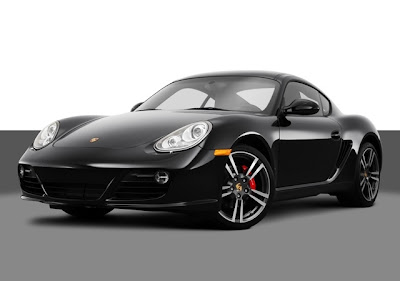
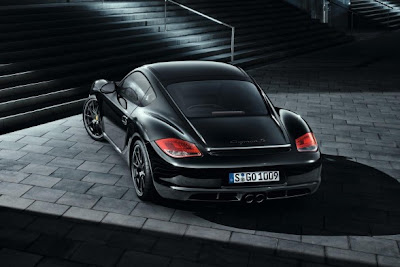
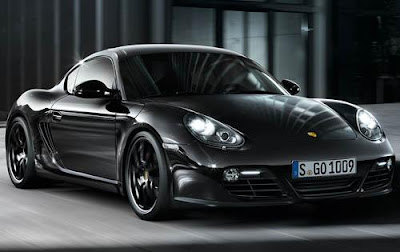
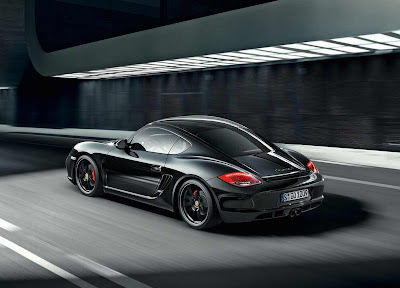
2013 Porsche Cayman S Engine Performance Review


2013 Porsche Cayman S

The design of the new 2013 Porsche Cayman models is befitting of their distinctive, sporty character. Their performance potential is obvious at first sight, for these are true specimens of force and athleticism. Individual styling features help to define both vehicles so impressively. A constant interaction of convex and concave curves. A certain style, like no other. Immediately, the front displays the kind of character that you expect to find in the new 2013 Cayman models. The front end has been restyled with enlarged air intakes that hint at the performance within.

Two new engines, several goals: increased power, improved driving dynamics, reduced fuel consumption and lower CO2 emissions. The engine is positioned in the middle of the car, 30 centimetres behind the driver. Just a few centimetres above road level. Any contact with the accelerator pedal unleashes power that knows only one direction: forwards. And a sound that is second to none. Both 2013 Porsche Cayman models are equipped with brand new engine developments, but have retained the familiar layout: six horizontally opposed cylinders. The 2.9-litre engine of the new Cayman delivers 195 kW (265 hp) at an engine speed of 7,200 rpm. The maximum torque of 300 Nm is achieved between 4,400 and 6,000 rpm. The new engine of the Cayman S has a 3.4-litre capacity and, for the first time, direct fuel injection (DFI, p. 34). Power output is 235 kW (320 hp) at 7,200 rpm. Maximum torque: 370 Nm at 4,750 rpm.

Each of the new engines convinces with its outstanding performance figures, extremely smooth running, optimised gas cycles and tremendous cornering agility, with fuel consumption and CO2 emissions reduced by up to 15% and 16%, depending on the model. All of this is achieved by DFI (in the Cayman S), a lightweight construction and a host of other engineering advancements, e.g. VarioCam Plus (p. 43). This system increases torque in the lower engine speed range and power output in the upper engine speed range. Injection and ignition are controlled by the engine electronics. The driver regulates engine power and of course sound using the extremely sensitive electronic accelerator pedal.


2013
 Porsche Cayman SThe new engine of the 2013 Porsche Cayman S has direct fuel injection (DFI). With millisecond precision, fuel is injected at up to 120 bar directly into the combustion chamber by means of electromagnetically actuated injection valves. The spray and cone angles have been optimised for torque, power output, fuel consumption and emissions by enabling a homogeneous distribution of the air/fuel mixture, and, therefore, effective combustion. Multiple fuel injections take place, depending on the driving style. DFI improves the internal cooling of the combustion chamber by having the mixture prepared directly in the cylinder. This allows for a higher compression ratio (12.5:1) which helps to deliver more output along with enhanced engine efficiency. It has therefore been possible to reduce fuel consumption by up to 15% and CO2 emissions by up to 16%, depending on the type of gearbox. Injection is regulated by the electronic engine management system. The exhaust gas cleaning system ensures that emissions remain well below even the strict limits of the EU5 emission standard, thus helping to protect the environment.

Both 2013 Cayman models are equipped with alloy engines. The advantages are their low weight
and reduced fuel consumption. Thanks to ingenious design down to the finest detail, it has been
2013
 Porsche Cayman Spossible to reduce the weight of the new generation of engines even further, e.g. by fully integrating the camshaft bearings into the cylinder heads. The oil reservoir is located inside the engine. Four oil pumps remove the oil from the cylinder heads directly into the oil sump. A fifth pump in the oil sump directly supplies the lubricating points in the engine. To reduce power loss and increase efficiency, an electronically controlled oil pump supplies the lubricating points inside the engine as and when required. This means that the oil pump does not work so hard when there is less demand for lubrication. The benefits of this oil supply system include optimum efficiency combined with a reduction in both fuel consumption and CO2 emissions. For the engine, these detailed solutions mean a consistent supply of oil regardless of gravitational loads, even in the most demanding track conditions.

The electronic engine management system ensures optimum engine performance at all times.
It regulates all engine-related functions and assemblies (see diagram). The results: optimum
performance and torque with reduced fuel consumption and emissions.Another important function of the system is cylinder-specific knock control. Since the six cylinders never all work under exactly the same conditions, they are monitored individually by the knock control. The ignition point is shifted individually, as and when necessary. This prevents damage to a cylinder or piston at high engine speeds and loads. The on-board diagnostics, which are compliant with European standards, ensure timely detection of any faults and defects that may occur in the exhaust and fuel systems and notify the driver immediately. This also prevents increased pollutant emissions and unnecessary fuel consumption.

2012 Porsche Cayman and 2012 Cayman S

 2012 Porsche Cayman S

The new 2012 Porsche Cayman and 2012 Porsche Cayman S Review . An uncompromising declaration of individuality. Two different characters. One personality. Their drive for power is impressive, their spirited nature fascinating. Two sports coupés that go beyond all conventions. Two cars that draw their drivers under their spell, forever. 

The concept behind the Cayman models is the ‘Le Mans Coupé’, a sports coupé designed in 1953 specifically for this legendary race and based on the 550 Spyder. Its mid-engine layout is what made this car special.The car’s low centre of gravity gave it tremendous agility and cornering dynamics. From this one basic idea came great success, and with this success our experience grew. The result? Two sophisticated sportscars. The new Cayman and the new Cayman S.


Their uncompromising performance is generated by two brand new engine developments, which stand out above all for their lightweight construction, power output and efficiency. The new 2012 Porsche Cayman  has a 2.9-litre flat-six engine with a power output of 195 kW (265 hp). Even more impressive are the performance values of the new Cayman S, now with direct fuel injection (DFI, p. 34). The fuel/air mixture is prepared entirely in the combustion chamber after having been metered and injected directly, with millisecond precision. This means even more power and torque. To express this in figures, its 3.4-litre flat-six engine unleashes a mighty 235 kW (320 hp). Depending on the model, it has been possible to reduce fuel consumption by up to 15% and CO2 emissions by up to 16%. In either model, this tremendous power is delivered to the road by a precision six-speed manual gearbox. New Porsche Doppelkupplung (PDK, p. 48) is also available as an option.


The key elements of PDK are its seven gears, two half gearboxes and two clutches. It features both manual and automatic modes. Gears are changed using the new gear selector for PDK or the buttons on the optional sports steering wheel for PDK. The gear change takes place in a matter of milliseconds without any interruption in the flow of power. The advantage over a fully manual transmission is the considerably faster rate of acceleration for the same rate of fuel consumption. The advantage over a fully automatic transmission is a perceptible increase in driving dynamics with a similar level of comfort, and a distinct reduction in fuel consumption.

2012
 Porsche Cayman S The handling of the new 2012 Cayman S Review models is impressive. The suspension tuning has been completely modified without sacrificing the comfort required for longer journeys. For a driving experience that is even more involving, consider the optionally available Sport Chrono Package (p. 62). It offers even sportier tuning of the engine and chassis at the push of a button. The optional mechanically locking rear differential* (p. 60) delivers high traction and increased performance. A wider track and generously dimensioned wheels in a new design are also your guarantee of a resolutely dynamic driving experience. The new headlight design and new LED taillights are a striking feature. Bi-Xenon headlights including LED daytime running lights and dynamic cornering lights are available as an option. Porsche Stability Management (PSM, p. 72), which is available as standard, makes you feel even safer and now comes with two additional functions: precharging of the brake system, and brake assist.


A high level of passive safety is provided by the driver’s and passenger’s airbags, which are
fitted as standard, and the Porsche Side Impact Protection System (POSIP, p.74) with head and thorax airbags. A look inside the passenger compartment leaves you in no doubt that the car was designed for uncompromising sportiness. All the important functions are intuitive to control, including the latest, optional Porsche Communication Management (PCM, p. 92) with navigation module, 6.5-inch touchscreen and CD/DVD drive. Optional seat ventilation keeps you cool when the weather is very warm, while the heated Porsche Doppelkupplung (PDK) steering wheel is a welcome feature on particularly cold days. The new, optionally available BOSE Surround Sound System offers a genuine alternative to the distinctive sound of the engine. In conjunction with the new PCM, it supports 5.1 surround sound for the first time.


2012 Porsche Boxster STo accept no compromises, to make conscious decisions, to be governed by nothing other than one's own free will, and to have a clear point of view. A highly promising way to build a sportscar. For us, it's the only way. It is from this philosophy that we developed the new mid-mounted engine with a 3.4-litre capacity and direct fuel injection (DFI, p. 34). The engine delivers a power output of 235 kW (320 hp) at 7,200 rpm, and a maximum torque of 370 Nm is achieved at 4,750 rpm. It has been possible to reduce fuel consumption by up to 15% and CO2 emissions by up to 16%, depending on the type of gearbox.


The new 2012 Porsche Cayman S reaches 62 mph (100 km/h) in just 5.2 seconds. Top speed isn’t reached until 172 mph (277 km/h). Porsche Doppelkupplung (PDK, p. 48) is available as an option. The fastest rate of acceleration of 4.9 seconds is achieved in conjunction with the optional Sport Chrono Package. In addition to having a higher power output, the new Cayman S also differs from the new Cayman in its appearance. It has a front spoiler painted in the vehicle’s exterior colour, and a new twin tailpipe in stainless steel. The sound? Distinctive. In keeping with the rest of the new Cayman S. But so much power also needs to be tamed. This is the task of the optimised brake system with four piston aluminium monobloc fixed calipers in a striking red painted finish. To deliver the increased power output to the road, the Cayman S is fitted with 18-inch Cayman S II wheels. Their new design exudes pure dynamism  as befits the model's overall look.

2012 Porsche Cayman Price  MSRP $ 51.900.00

2012 Porsche Cayman S Price MSRP $ 62.100.00

BlackCarRacing

Twitter Delicious Facebook Digg Stumbleupon Favorites More